
Fort Myers homeowners know the feeling well—stepping outside in July feels like walking into a wall of heat. With temperatures regularly climbing above 90°F and humidity levels that make it worse, your home’s cooling system isn’t a luxury. It’s a necessity. That’s why more Southwest Florida residents are turning to ductless mini split systems as a smarter, more flexible alternative to traditional central air conditioning.
Mini split installation in Fort Myers has surged in popularity in recent years, and for good reason. These systems deliver powerful, energy-efficient cooling without the need for extensive ductwork, making them ideal for Florida’s unique mix of older homes, coastal properties, and modern additions. In this guide, you’ll learn what mini splits are, why they thrive in Florida’s climate, and how to decide if one is the right fit for your home.
What Is a Mini Split System?
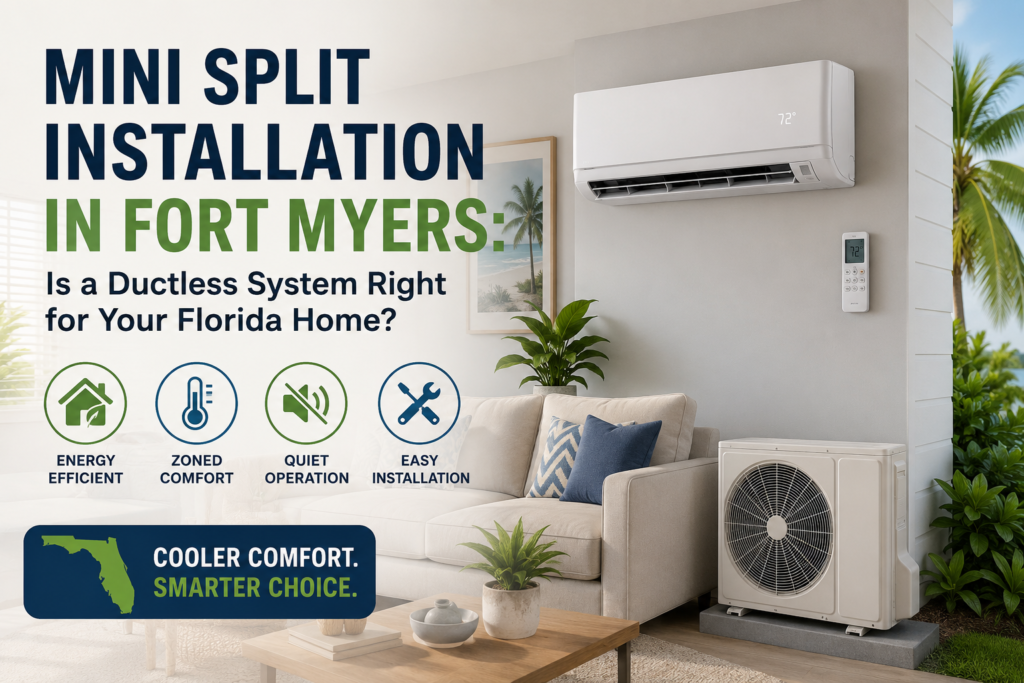
A ductless mini split system consists of two main components: an indoor air handler mounted on the wall or ceiling and an outdoor condenser unit. The two are connected through a small conduit housing the refrigerant lines, power cables, and drainage—requiring only a small hole in the wall, rather than a full duct system.
Mini splits come in single-zone configurations (one indoor unit, one outdoor unit) and multi-zone setups that can connect several indoor units to a single outdoor condenser. Most modern systems provide both heating and cooling, which is useful even in Florida during cooler winter months.
The key difference from central AC? There’s no ductwork. That eliminates the energy losses associated with ducts—losses that, according to the U.S. Department of Energy, can account for more than 30% of energy consumption in homes with forced-air systems.
Why Mini Split Systems Are Popular in Fort Myers
Florida’s climate is essentially a worst-case scenario for traditional HVAC systems. Fort Myers sees high cooling demand for roughly nine to ten months of the year, paired with extreme humidity that conventional systems can struggle to manage effectively.
Mini splits handle humidity remarkably well. Their variable-speed compressors—known as inverter technology—run continuously at lower speeds rather than cycling on and off, which allows for more consistent dehumidification alongside temperature control. The result is a cooler, more comfortable indoor environment without the clammy feeling that inefficient cooling can leave behind.
Coastal homes near Fort Myers also benefit from mini split designs that tend to be more resistant to salt air corrosion when properly maintained. Add rising electricity costs to the equation, and the case for energy-efficient ductless systems becomes even stronger.
Benefits of Mini Split Installation in Fort Myers
Energy Efficiency
Because mini splits use inverter-driven compressors, they avoid the energy spikes that occur every time a traditional system cycles on. They deliver exactly the amount of cooling needed, rather than blasting at full capacity until a thermostat trips. Over time, this translates to meaningfully lower monthly utility bills.
Zoned Comfort
Multi-zone mini split systems allow different rooms to be set at different temperatures simultaneously. The bedroom stays cooler for sleeping while the living room stays slightly warmer—no more household arguments over the thermostat, and no energy wasted cooling empty rooms.
Easy Installation
Compared to retrofitting a home with central air ducts, mini split installation is relatively quick and minimally invasive. Most residential installs can be completed in one to two days, with only a small wall penetration required for the refrigerant line.
Improved Indoor Air Quality
Mini split systems include multi-stage filtration that captures dust, allergens, and airborne particles more effectively than standard duct-based systems, which can accumulate debris over time. Cleaner air circulation is especially valuable in Florida, where mold and allergens are persistent concerns.
Quiet Performance
Indoor air handlers operate at very low noise levels—often as quiet as a library. That makes them particularly well-suited for bedrooms, home offices, and spaces where background noise is a disruption.
Is a Ductless Mini Split Right for Your Home?
Mini splits aren’t the right solution for every situation, but they excel in specific scenarios that are very common among Fort Myers homeowners:
- Older homes without existing ductwork, where installing ducts would be prohibitively expensive or structurally difficult
- Home additions such as sunrooms, guest rooms, bonus rooms, and garage conversions
- Florida rooms and screened-in spaces that fall outside the reach of central air
- Converted attics or spaces with limited access for traditional duct routing
- Small apartments, condos, and vacation homes where central HVAC infrastructure isn’t practical
Mini Split vs. Central Air Conditioning
| Feature | Mini Split | Central AC |
| Ductwork Required | No | Yes |
| Installation Time | Faster | Longer |
| Energy Efficiency | Excellent | Good |
| Zoned Cooling | Yes | Limited |
| Maintenance | Easier | Moderate |
| Initial Cost | Moderate | Higher (with ducts) |
The right choice depends heavily on your home’s layout, existing infrastructure, and budget. For homes already equipped with functional ductwork and a properly sized central system, upgrading to a mini split may not be necessary. For homes without ducts—or rooms that central AC simply can’t reach—mini splits are often the more cost-effective and practical solution.
Factors to Consider Before Installing a Mini Split
Before committing to a system, consider the following:
- Home size and number of rooms: Multi-zone systems scale well for larger homes, but proper planning is essential
- Budget: Equipment and installation costs vary by brand, system size, and complexity
- Existing HVAC system: A mini split may supplement your current system rather than replace it
- Electrical requirements: Mini splits require dedicated circuits and may need an electrical panel upgrade
- Indoor unit placement: Units should be positioned for optimal airflow without obstruction
- Outdoor condenser location: Adequate clearance and shade can improve efficiency and longevity
Why Professional Mini Split Installation Matters
Mini split installation is not a DIY project. Improper sizing is one of the most common mistakes—an undersized unit won’t cool adequately, while an oversized one cycles too quickly and fails to control humidity. Both scenarios waste energy and shorten equipment life.
Beyond sizing, refrigerant handling requires EPA certification. Electrical work must meet local building codes. And many manufacturers void their warranties if units aren’t installed by a licensed professional. In short, cutting corners on installation ends up costing more in the long run.
Fine Air Florida provides professional HVAC installation, repair, and maintenance services throughout Southwest Florida. Their NATE-certified technicians bring the expertise needed to size, install, and commission systems correctly—protecting both your investment and your home’s comfort.
How the Mini Split Installation Process Works
A professional installation typically follows these steps:
- Home assessment to evaluate layout, insulation, and existing systems
- Load calculation to determine the correct system capacity
- Equipment selection based on your needs and budget
- Indoor unit placement for optimal airflow and aesthetics
- Outdoor condenser installation with appropriate clearance and support
- Refrigerant line connection through the wall conduit
- Electrical work and dedicated circuit installation
- System testing to confirm proper operation
- Homeowner walkthrough covering controls, settings, and maintenance basics
Mini Split Maintenance Tips
Keeping your system running efficiently doesn’t require much—but consistency matters:
- Clean filters monthly to maintain airflow and air quality
- Keep the outdoor unit clear of vegetation, debris, and obstructions
- Schedule annual HVAC maintenance with a licensed technician
- Check the condensate drain regularly to prevent clogs and water damage
- Monitor refrigerant performance and watch for any drop in cooling capacity
- Listen for unusual noises, which can signal mechanical issues early
Common Mistakes Homeowners Should Avoid
- Selecting the wrong system size based on guesswork rather than a load calculation
- Hiring unlicensed or inexperienced installers to reduce upfront costs
- Skipping routine maintenance until a problem develops
- Blocking indoor unit airflow with furniture or curtains
- Placing indoor units in locations that restrict proper air distribution
- Focusing exclusively on the lowest purchase price rather than long-term efficiency and reliability
Why Fort Myers Homeowners Trust Fine Air Florida
Choosing a qualified HVAC contractor is just as important as choosing the right equipment. Fine Air Florida’s NATE-certified technicians bring hands-on experience with residential systems across Southwest Florida, offering expert system recommendations, proper sizing, and workmanship that stands behind manufacturer warranties. As a family-owned business serving the local community, they understand what Fort Myers homes require and deliver cooling solutions built to last.
The Bottom Line on Mini Split Installation in Fort Myers
Ductless mini split systems offer a compelling combination of efficiency, flexibility, and comfort that makes them a natural fit for many Florida homes. Whether you’re dealing with a room your central system can’t reach, a home without existing ductwork, or simply rising electricity bills, a properly installed mini split can make a real difference. The key word is “properly.” Scheduling a professional evaluation is the best first step—a qualified technician can assess your home’s specific needs and recommend the right system and installation approach. If you’re exploring mini split installation in Fort Myers, contact Fine Air Florida to schedule your consultation and find the solution that’s right for your home.
FAQs
Ans: – A mini split is a ductless heating and cooling system made up of an indoor air handler and an outdoor condenser unit. The two are connected through a small conduit rather than traditional ductwork, making installation simpler and less invasive than central HVAC systems.
Ans: – For many Fort Myers homeowners, yes. Mini splits offer strong energy efficiency, superior humidity control, and flexible zoning—all of which are particularly valuable in Florida’s hot, humid climate. They’re especially cost-effective in homes without existing ductwork or in spaces a central system can’t adequately serve.
Ans: – Most residential mini split installations take one to two days, depending on the number of indoor units and the complexity of the job. Multi-zone systems or installations requiring electrical panel upgrades may take slightly longer.
Ans: – A multi-zone mini split system can cool an entire home by connecting multiple indoor air handlers to a single outdoor unit. Whether this is the right approach depends on your home’s size, layout, and existing HVAC setup—a professional load calculation will give you the clearest answer.
Ans: – Yes. Monthly filter cleaning, annual professional tune-ups, and periodic checks of the condensate drain and refrigerant levels are all recommended to keep your system running efficiently and extend its lifespan.