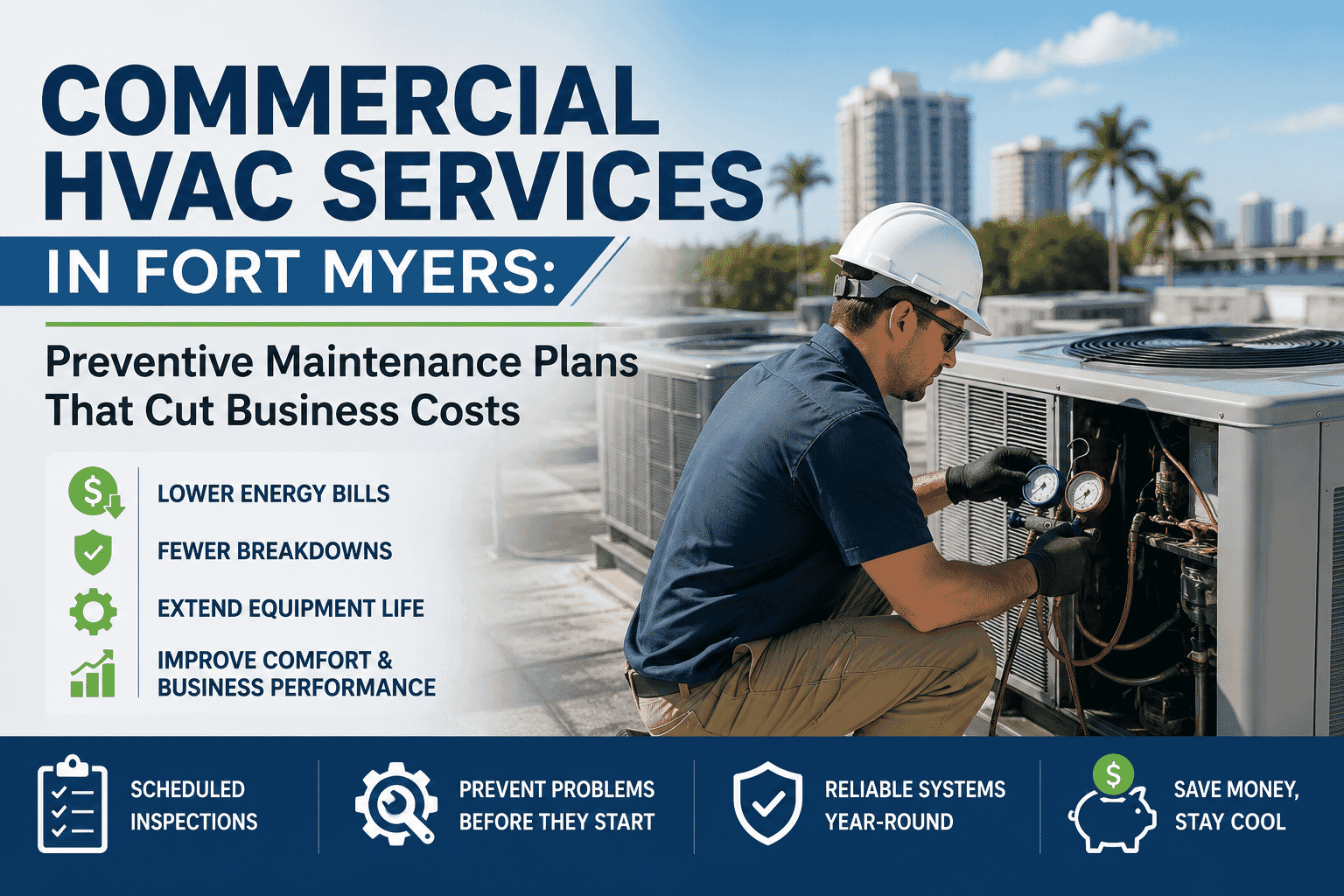
Fort Myers businesses operate in one of the most demanding climates in the country. Year-round heat, persistent humidity, and salt air put commercial HVAC systems under constant pressure—and when those systems fail, the consequences go well beyond discomfort. Emergency repairs, lost productivity, and dissatisfied customers can hit your bottom line hard.
Preventive maintenance changes that equation. Rather than waiting for something to break, a structured maintenance plan keeps your system running efficiently, reduces operating costs, and extends equipment life. Fine-Air Cooling and Heating Services offers comprehensive commercial HVAC services in Fort Myers, including preventive maintenance plans, repairs, installations, and emergency support—so businesses can stay focused on what matters most.
Why Preventive HVAC Maintenance Matters for Fort Myers Businesses
Florida’s climate doesn’t give commercial HVAC systems much of a break. Unlike many parts of the country where systems run seasonally, Fort Myers businesses rely on their cooling and heating equipment nearly every day of the year. That continuous operation accelerates component wear, strains refrigerant systems, and allows salt air, humidity, and airborne debris to quietly reduce equipment efficiency over time.
The stakes are high across virtually every commercial setting. Office buildings depend on consistent temperatures to maintain employee productivity. Restaurants must protect food safety and customer comfort. Retail stores lose foot traffic when interiors feel stuffy or hot. Medical facilities have strict climate control requirements. Warehouses and property management companies face significant liability and operational disruption when systems go down unexpectedly.
Preventive maintenance keeps all of these environments protected before problems develop.
Hidden Costs of Skipping Commercial HVAC Maintenance
Many businesses delay maintenance to reduce costs. In practice, skipping routine service typically costs far more.
Higher Energy Bills
Dirty coils, restricted airflow, and worn components force your system to work harder to maintain the same output. Longer runtime means higher utility bills every month—costs that accumulate long before a visible breakdown occurs.
Unexpected Emergency Repairs
Compressor failures, refrigerant leaks, fan motor problems, and electrical failures rarely happen at convenient times. Emergency service calls are more expensive than scheduled maintenance, and parts replacement under pressure often carries premium pricing.
Lost Business Revenue
A failed HVAC system creates uncomfortable conditions for customers and employees alike. Depending on your industry, even a few hours of downtime can translate into canceled appointments, lost sales, and reputational damage.
Shortened Equipment Lifespan
Commercial HVAC equipment represents a significant capital investment. Without regular maintenance, systems wear out years ahead of their expected service life, leading to expensive early replacements that disrupt budgets and operations.
What’s Included in a Commercial HVAC Preventive Maintenance Plan?
A thorough maintenance plan covers every critical component of your system. Here’s what a professional inspection and service visit should include:
Complete System Inspection
Technicians check electrical connections, thermostats, controls, and safety switches to identify any issues before they escalate.
Air Filter Replacement
Clean filters improve airflow, support cleaner indoor air quality, and reduce the energy load on your system.
Coil Cleaning
Both evaporator and condenser coils are cleaned to maintain proper heat transfer efficiency—one of the most direct ways to preserve system performance and lower energy costs.
Refrigerant Inspection
Leak detection and pressure testing confirm your system is operating with the correct refrigerant charge, which directly affects cooling performance.
Drain Line Cleaning
Clogged condensate drain lines lead to water damage and mold growth. Regular cleaning prevents both.
Lubrication of Moving Parts
Bearings, motors, and fans require proper lubrication to operate smoothly and avoid friction-related wear.
Belt & Motor Inspection
Technicians assess belt tension, check for wear, and evaluate motor operation to catch deterioration early.
System Performance Testing
Temperature split measurements, airflow assessments, and operating pressure checks verify the system is delivering the performance your business depends on.
How Preventive Maintenance Reduces Business Costs
The financial case for preventive maintenance is straightforward when you look at the savings across multiple categories.
Lower Monthly Utility Bills
A well-maintained system runs more efficiently. Clean coils, proper refrigerant levels, and unrestricted airflow reduce energy consumption—often enough to offset the cost of the maintenance plan itself.
Fewer Emergency Service Calls
Routine inspections catch developing problems before they cause failures, dramatically reducing the frequency and cost of emergency service.
Reduced Repair Costs
Small issues caught early are far less expensive to fix than major component failures. Preventive maintenance shifts spending from reactive, high-cost repairs to planned, predictable expenses.
Longer Equipment Life
Regular servicing extends the useful life of commercial HVAC equipment by years, delaying capital replacement costs and protecting your investment.
Improved Employee Comfort
Consistent, comfortable indoor temperatures support employee focus and reduce fatigue—particularly important in Fort Myers, where outdoor heat makes an unreliable system noticeably disruptive.
Better Customer Experience
Customers notice when a space is uncomfortable. Maintaining a stable, pleasant environment directly supports customer retention and satisfaction.
Reduced Risk of Business Downtime
Preventive maintenance is one of the most reliable ways to avoid unplanned operational interruptions, particularly during peak summer months when HVAC systems are under the greatest stress.
Signs Your Commercial HVAC System Needs Maintenance
If your system is showing any of the following symptoms, scheduling service sooner rather than later is worthwhile:
- Rising utility bills without a clear explanation
- Uneven temperatures across different areas of the building
- Weak or reduced airflow from vents
- Unusual noises such as grinding, rattling, or banging
- Musty or unpleasant odors when the system runs
- Frequent cycling on and off
- Thermostat inconsistencies or control issues
- Excess humidity indoors
- Water leaks or moisture around equipment
- Increasing frequency of repairs over recent months
How Often Should Commercial HVAC Systems Be Serviced?
Cooling systems should receive professional service at least twice per year, typically before the peak cooling season begins and again before any heating demand increases.
High-usage commercial buildings benefit from quarterly inspections, which provide more frequent opportunities to catch wear before it leads to failures.
Restaurants and high-demand facilities may require more frequent maintenance given the elevated operational demands and air quality considerations specific to those environments.
The right maintenance schedule depends on building size, operating hours, occupancy levels, equipment age, and any industry-specific requirements. A qualified commercial HVAC provider can recommend a plan tailored to your facility.
Choosing the Right Commercial HVAC Maintenance Provider in Fort Myers
Not every HVAC contractor has the experience or resources to support commercial systems properly. When evaluating providers, look for:
- Licensed and insured technicians with documented commercial HVAC experience
- Structured preventive maintenance programs with clear service agreements
- Emergency service availability for after-hours and weekend situations
- Transparent pricing with no surprise fees
- Fast response times that align with your operational needs
- Maintenance documentation so you have a clear record of service history
- Local knowledge of Southwest Florida’s specific climate conditions and their impact on equipment
Fine-Air Cooling and Heating Services provides commercial HVAC installation, maintenance, repairs, and emergency support for businesses throughout Southwest Florida, with the local experience to match service recommendations to the demands of the regional environment.
Why Businesses Trust Fine-Air Cooling and Heating Services
Fine-Air brings experienced commercial HVAC professionals to every job, offering customized service schedules based on each facility’s unique requirements. The focus is on energy-efficient solutions, honest recommendations, and high-quality workmanship designed to reduce long-term operating costs—not just address immediate issues.
Emergency response is a core part of the service offering, so businesses have dependable support when unexpected problems arise. Maintenance plans are built to be practical, cost-effective, and aligned with each client’s operational priorities.
Protect Your Business Before the Next Breakdown
Preventive HVAC maintenance is an investment, not an overhead expense. Regular servicing lowers repair costs, extends equipment life, improves system efficiency, and reduces the risk of unexpected downtime—all of which directly benefit your bottom line. The best time to schedule maintenance is before a minor issue becomes a costly repair. Contact Fine-Air Cooling and Heating Services today to learn more about commercial HVAC services in Fort Myers and find a preventive maintenance plan that keeps your business running smoothly year-round.
FAQs
Ans: – Preventive maintenance keeps commercial HVAC systems running efficiently by catching minor issues before they become costly failures. In Fort Myers, where systems operate year-round under demanding climate conditions, regular servicing reduces emergency repair costs, lowers energy bills, and extends equipment lifespan.
Ans: – Most commercial systems should be serviced at least twice per year. High-usage buildings and restaurants may require quarterly visits. The appropriate frequency depends on factors including building size, operating hours, occupancy, and equipment age.
Ans: – A standard plan covers system inspections, air filter replacement, coil cleaning, refrigerant inspection, drain line cleaning, lubrication of moving parts, belt and motor checks, and overall performance testing to verify the system is operating correctly.
Ans: – Yes. Clean coils, proper refrigerant levels, and unrestricted airflow allow the system to operate more efficiently, reducing the energy needed to maintain target temperatures. Many businesses see utility savings that partially or fully offset the cost of their maintenance plan.
Ans: – Commercial HVAC equipment typically lasts 15 to 20 years with consistent preventive maintenance. Without regular servicing, systems can fail significantly earlier, leading to unplanned capital expenses and operational disruption.
qjgnzdyxfhnhqnkopgxyjdwzqshslu