
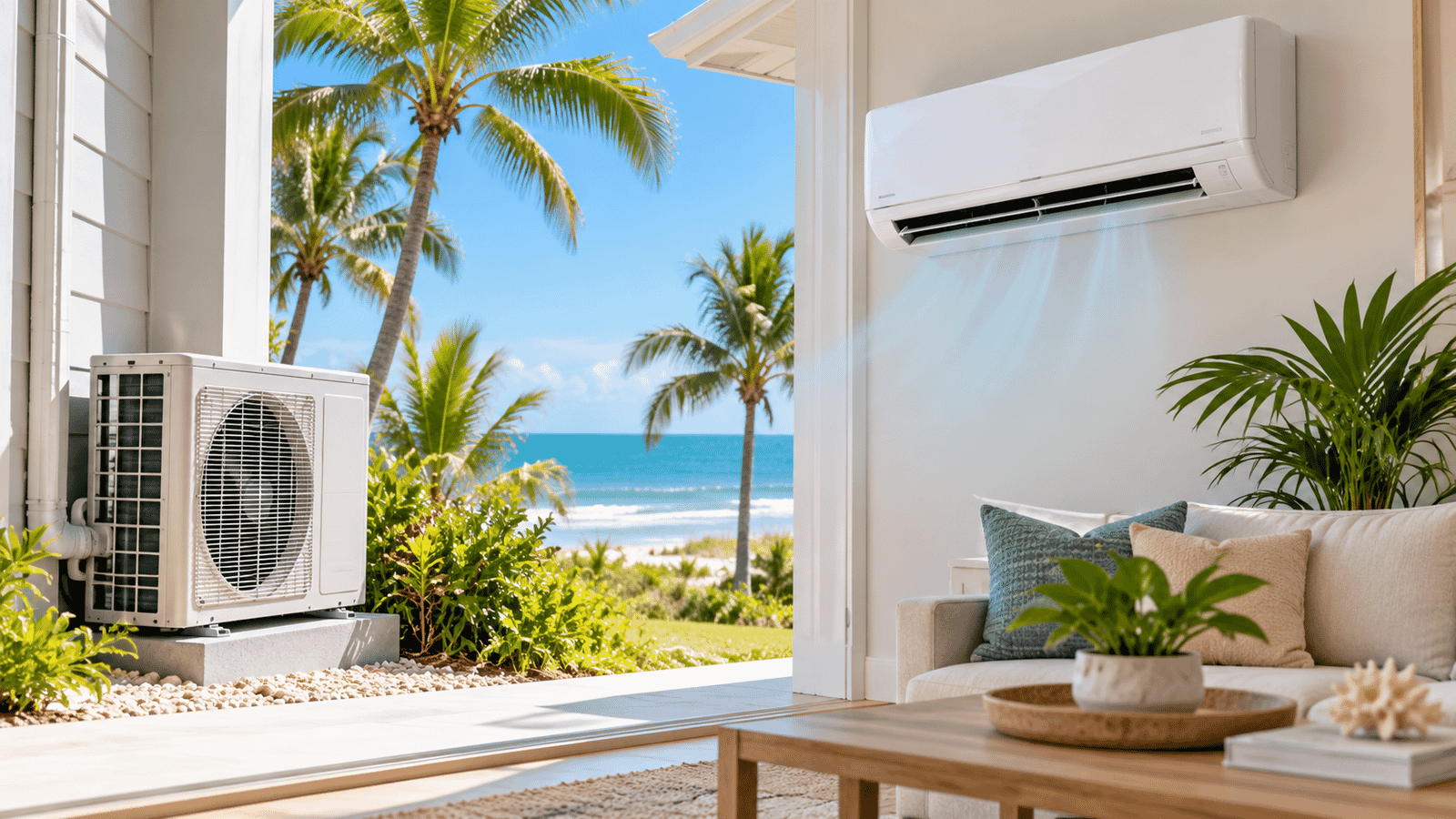
Sanibel’s heat and humidity don’t let up for long, and that makes dependable home cooling less of a luxury and more of a daily necessity. For many homeowners, mini split installation in Sanibel offers a flexible alternative to traditional central air conditioning, especially in rooms that ductwork never reached.
Ductless mini-split systems are a popular choice for home additions, garage conversions, guest rooms, and older properties where running new ducts would be costly or impractical. They cool (and often heat) individual spaces without the energy losses that can come with long duct runs.
Before deciding if a mini-split is right for your home, it helps to understand how these systems work, what they typically cost, and what ongoing maintenance looks like in a coastal climate like Sanibel’s. This guide walks through each of those considerations so you can make an informed decision.
What Is a Ductless Mini-Split Air Conditioning System?
A ductless mini-split is a cooling (and sometimes heating) system that conditions individual rooms or zones without relying on a network of ducts. Homeowners often consider mini-splits when they need targeted comfort in specific areas, or when installing traditional ductwork isn’t feasible.
How Does a Mini-Split System Work?
A mini-split system consists of an indoor air-handling unit mounted on a wall or ceiling, paired with an outdoor compressor and condenser unit. Refrigerant lines and electrical connections run between the two, typically through a small hole in an exterior wall.
During cooling, the system absorbs heat from indoor air and transfers it outside through the refrigerant cycle. Many mini-split models use heat-pump technology, which means they can reverse this process to provide heating when needed, making them a year-round comfort option in many climates.
Single-Zone vs. Multi-Zone Mini-Splits
Mini-split systems come in two basic configurations:
- Single-zone system: One indoor unit connected to one outdoor unit, designed to cool a single room or open area.
- Multi-zone system: Multiple indoor units connected to a single outdoor unit, allowing different rooms or areas to be set to different temperatures independently.
The right configuration depends on how many spaces need conditioning and how those spaces are used.
Top Benefits of Mini Split Installation in Sanibel
Ductless systems offer several advantages that matter in Southwest Florida’s climate, from efficiency to comfort.
1. Energy-Efficient Cooling
Traditional ducted systems can lose a meaningful amount of conditioned air through leaks, gaps, and poorly insulated ductwork. Mini-splits avoid this entirely since they deliver air directly into the room. Many models also use inverter-driven compressors, which adjust their output to match real-time cooling demand instead of cycling fully on and off. This can translate to more consistent comfort and potentially lower energy use, depending on the system and how it’s operated.
2. Personalized Temperature Control
With a multi-zone setup, homeowners can cool the rooms they’re actually using without conditioning the entire house to the same temperature. A guest suite that sits empty most of the year doesn’t need to be cooled as aggressively as a primary living space, and zoning makes that kind of flexibility possible.
3. Easier Installation in Homes Without Ductwork
Older Sanibel properties, converted spaces, and new additions often lack existing ductwork. Installing ducts after the fact can mean opening walls or ceilings, which adds cost and disruption. Mini-splits sidestep this by requiring only a small wall penetration for refrigerant lines and wiring, making them a practical option where ductwork isn’t already in place.
4. Quiet Indoor Operation
Depending on the equipment selected, mini-split indoor units can operate quietly compared to some conventional cooling arrangements, since the compressor noise stays outside with the condenser unit. This can make a noticeable difference in bedrooms, home offices, or other spaces where quiet matters.
5. Improved Comfort During Humid Weather
Florida’s humidity is a year-round concern, and a properly sized, well-maintained mini-split can help manage indoor moisture while cooling. That said, actual humidity control depends on several factors, including system design, how long the unit runs, and the moisture conditions specific to your home. An undersized or short-cycling system may not manage humidity as effectively.
How Much Does Mini Split Installation in Sanibel Cost?
There’s no single price that applies to every home. The total cost of mini split installation in Sanibel depends on several variables, including equipment capacity, efficiency rating, installation complexity, and how many indoor units the project requires.
Key Factors That Affect Installation Costs
- System size: Cooling capacity needs to match the home’s heat load. An undersized system struggles to keep up; an oversized one can cycle inefficiently.
- Number of zones: Multi-zone setups generally involve more equipment and labor than a single-zone installation.
- Equipment efficiency: Higher-efficiency models often carry a higher upfront price but may offer long-term operating savings.
- Electrical work: Panel upgrades, new circuits, or wiring modifications can add to the overall estimate.
- Installation location: Wall access, refrigerant-line routing, condensate drainage, and where the outdoor unit is placed all influence labor requirements.
- Permits and compliance: Local building, electrical, and mechanical code requirements may add to the project scope and cost.
Because so many factors are involved, the most reliable way to understand your costs is to request a written, itemized estimate from a qualified HVAC contractor. When comparing quotes, look beyond the bottom-line number. Review the full installation scope, warranty coverage, and expected operating costs, rather than choosing based on price alone.
Is a Mini-Split System Right for Your Sanibel Home?
Mini-splits aren’t the right fit for every situation, but they tend to work well for certain property types and comfort needs.
Ideal Applications
Ductless systems are commonly used for:
- Rooms that consistently stay warmer than the rest of the house.
- Garage conversions and home additions.
- Guest suites and detached living spaces.
- Homes without existing ductwork.
- Properties that need supplemental cooling in specific areas.
When to Consider Another Option
A single mini-split typically isn’t designed to cool an entire large, multiroom home on its own. If you’re after whole-house comfort, it’s worth comparing a multi-zone mini-split setup against a properly designed central HVAC system to see which better fits your home’s layout, square footage, and budget.
What to Expect During Professional Mini-Split Installation
While every project varies, most mini-split installations follow a similar sequence:
- Home assessment: The contractor evaluates room dimensions, insulation, window exposure, occupancy patterns, and overall cooling needs.
- System selection: Based on that assessment, the contractor recommends the appropriate capacity, efficiency level, and number of zones.
- Installation planning: This includes identifying indoor-unit placement, outdoor-unit location, refrigerant-line routing, and condensate drainage paths.
- Equipment installation: The technician mounts the indoor and outdoor units and installs the refrigerant lines, electrical connections, and drainage components.
- Testing and commissioning: The system is tested for proper airflow, refrigerant performance, drainage, and control function before the job is considered complete.
The exact process and timeline depend on your property and the scope of the installation. Working with a professional installer helps ensure the system is installed safely, meets applicable codes, and performs reliably over time.
Mini-Split Maintenance Tips for Sanibel Homeowners
Florida’s climate, especially its coastal humidity and salt exposure, places extra demands on HVAC equipment. A few maintenance habits can help keep a mini-split running efficiently:
- Clean or wash reusable filters according to the manufacturer’s instructions.
- Keep the outdoor unit clear of leaves, debris, and nearby vegetation.
- Schedule periodic professional inspections and servicing.
- Watch for drainage issues, unusual noises, leaks, or a noticeable drop in cooling performance.
- Ask your technician to check outdoor components for corrosion or deterioration related to coastal exposure.
- Follow the manufacturer’s recommendations for cleaning coils and maintaining condensate drains.
Routine maintenance supports efficiency, comfort, and the long-term lifespan of the equipment, which matters in a climate that runs the system hard for much of the year.
Why Choose Fine Air Florida for HVAC Installation in Sanibel?
Fine Air Cooling and Heating Services, LLC provides HVAC installation, repairs, maintenance, and heat-pump services throughout Southwest Florida, including Sanibel. As a family-owned company, Fine Air Florida focuses on personalized service and customer satisfaction, with NATE-certified technicians handling installations and repairs, as noted on the company’s website. If you’re weighing your options for mini split installation in Sanibel, it’s worth discussing your home’s specific cooling needs with a knowledgeable local team. Reach out to Fine Air Florida to talk through your property and request a professional estimate.
FAQs
Costs vary based on system size, number of zones, equipment efficiency, electrical requirements, and installation complexity. Requesting a written, itemized estimate from a licensed HVAC contractor is the most reliable way to get an accurate price for your home.
Many mini-split systems use inverter-driven compressors that adjust output to match cooling demand, which can support efficient operation. Actual energy performance depends on the specific equipment, installation quality, and how the system is used.
A single mini-split is generally best suited for cooling one room or area. For whole-house comfort, homeowners typically compare a multi-zone mini-split system against a central HVAC system based on their home’s size and layout.
Installation timelines depend on the scope of the project, including the number of zones, electrical work needed, and site-specific factors like line routing and outdoor-unit placement. A contractor can provide a more specific timeline after assessing your property.
A properly sized and well-maintained mini-split can help manage indoor humidity while cooling. Performance depends on factors like system design, runtime, and the moisture conditions specific to your home.